
How to Check Criminal History in Howard County
Howard County has no one criminal-history database. Begin with the source closest to the event. Iowa Courts Online is the best first stop for a charge that was filed in District Court. The Howard County Clerk supplies filed documents and certified dispositions. The Law Enforcement Center answers current custody questions, while the arresting agency keeps its own report. Iowa DCI provides the statewide, fingerprint-backed summary. Each source has a different job, so a blank result in one system does not settle the question.
Collect the person's full name, exact date of birth when allowed, spelling variants, the approximate event date, and the location. A case number, report number, or offender number is far safer than a name alone. Then work through the official channels in order:
- Search Iowa Courts Online with Howard selected and review likely case IDs, charge codes, status, and disposition.
- Ask the Howard County Clerk for documents or a certified outcome when the public index is incomplete.
- Call the Howard County Law Enforcement Center for recent booking or current custody information.
- Request the incident or arrest report from the Sheriff or Cresco Police, based on where the event occurred.
- Order an Iowa DCI record check for the fingerprint-backed statewide history, then correct any missing disposition with proof from the court.
The official Howard County homepage shows the local government route behind these offices.
That county entry point is useful for verifying current contacts before a visit or written request.
Howard County Records at Two Counters
Two addresses in Cresco divide Howard County criminal records by function. Filed cases belong at the Courthouse, 137 North Elm Street. The Clerk there handles dockets, court documents, dispositions, certified copies, court debt, and older or restricted case questions. Arrest and custody material belongs at the Law Enforcement Center, 124 South Park Place. The Sheriff's Office and county jail use that building for incident reports, booking files, current custody, warrant confirmation, and jail matters.
The short distance between the Howard County offices can hide a major records distinction. A booking sheet can state the allegation at intake, but only the court file shows what the County Attorney filed and how a judge resolved it. The Howard County Sheriff cannot certify a court disposition. Likewise, the Clerk does not hold the police narrative. Ask for the record by name and describe the event, date, location, and desired format.
| Need | Howard County custodian | Contact |
|---|---|---|
| Case docket or disposition | Clerk of Court, 137 N Elm St | 563-547-9206 |
| Sheriff report or booking file | Law Enforcement Center, 124 S Park Pl | 563-547-3535 |
| Charging office | Howard County Attorney, 137 N Elm St | 563-547-9202 |
The Howard County office directory places the court, attorney, and sheriff contacts in one official list.
The directory helps prevent a request for a court record from landing at the jail counter.
Official Iowa Background Checks
The Iowa Department of Public Safety, Division of Criminal Investigation keeps the central state repository. Iowa Record Check Online and the DCI-77 request process support a name-based Iowa check. The minimum identifiers are first name, last name, and exact date of birth. DCI charges $15 for each last name searched, so a person with two last names or a prior name may require separate requests. Telephone orders are not accepted, but online, mail, fax, email, and in-person channels are documented.
A name check differs from a fingerprint-based identity review. DCI associates fingerprintable Howard County arrest cycles with later court dispositions when agencies submit the data. Personal FBI Identity History Summary requests also require fingerprints. Howard County has no verified statewide vendor enrollment site or published local fingerprint fee, so call the Sheriff before traveling for local ink-print service.
| Official product | Core input | Published base fee |
|---|---|---|
| Iowa DCI name check | First name, last name, exact birth date | $15 per last name |
| FBI identity summary | Applicant fingerprints and order | $18 FBI fee |
| Howard County report | Event details and record description | No county schedule posted |
The Iowa DCI criminal-history page explains the state request choices and release rules.
This official page is the right place to confirm forms, delivery methods, and current processing guidance.
Howard County DCI Release Differences
Iowa permits a person to request a DCI name check on another person without a signed release. The response is narrower without that consent. DCI withholds completed deferred judgments and arrests more than 18 months old when no final disposition is recorded. Most juvenile material remains confidential either way. A response stating that no Iowa history was found can also mean that information exists but cannot lawfully be released.
For a review of your own Howard County criminal history, sign the release when the form calls for it and compare the DCI response with the Howard County court docket. If an arrest cycle lacks its final outcome, obtain a certified disposition from the Clerk and send the correction evidence to DCI. The state summary is not a copy of the police narrative, a full court file, or a live jail roster.
The FBI electronic identity-history portal is the official national subject-access route.
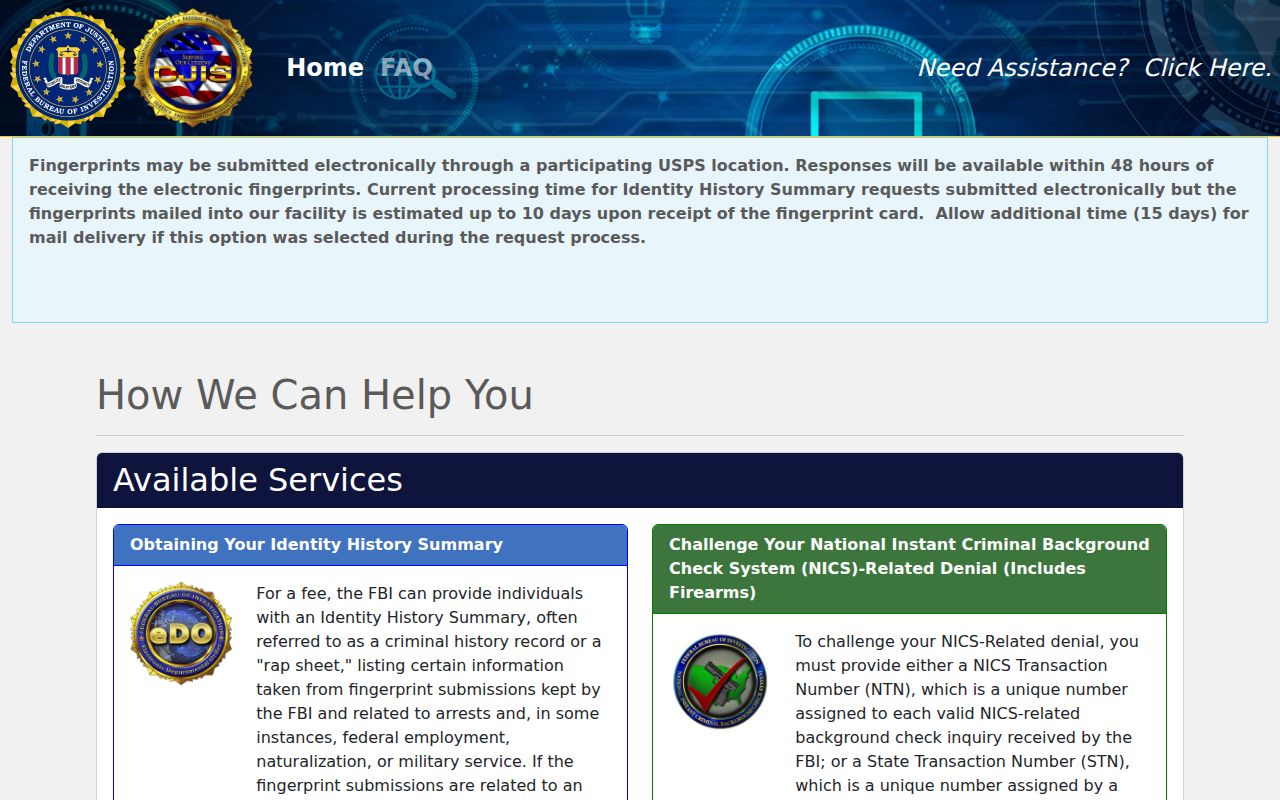
Its fingerprint requirement makes the federal summary a different product from an Iowa name search.
Note: A signed Iowa release expands certain DCI results but does not open confidential juvenile records or replace fingerprint identity matching.
Types of Criminal Records
Howard County criminal records form a chain, not a single file. The creating Howard County office controls the details and the legal access rules. An incident report may describe witnesses and evidence that never appear in court. A jail booking captures intake and release facts. The District Court file records filed charges and judicial action. DCI connects qualifying fingerprint events with reported outcomes, and the Iowa Department of Corrections tracks later state custody or supervision.
- Incident and arrest reports: held by the Sheriff, Cresco Police, or another agency that investigated the event.
- Booking and jail records: created by the Howard County Law Enforcement Center during intake and release.
- Criminal case files: maintained by the Clerk after the County Attorney files a case in Iowa District Court.
- DCI criminal history: a fingerprint-backed state event summary with release limits under Iowa law.
- Corrections and registry records: current public status kept in separate Iowa DOC and sex-offender systems.
A warrant also has two sides. The court creates the authority, while law enforcement confirms whether it remains active and handles execution. An online docket can help, but direct confirmation is safer.
Howard County Jail Roster Fallback
The official Howard County site does not publish a jail roster, booking log, or mugshot gallery. The working route starts with the Law Enforcement Center at 563-547-3535. Ask whether a person is currently held, whether public bond or court information may be given, and how to request the booking record. For a recent event, allow for the fact that a court case may not yet exist.
Next, search Iowa Courts Online for a filed Howard County case. If the person has moved into prison, work release, probation, or parole, use Iowa DOC Offender Search. DOC data are updated weekly, so that system is not a live county custody tool. VINELink may provide notifications, but it does not replace a court file or direct jail confirmation.
Howard County's official courthouse contact page confirms the public counter details used in this fallback chain.
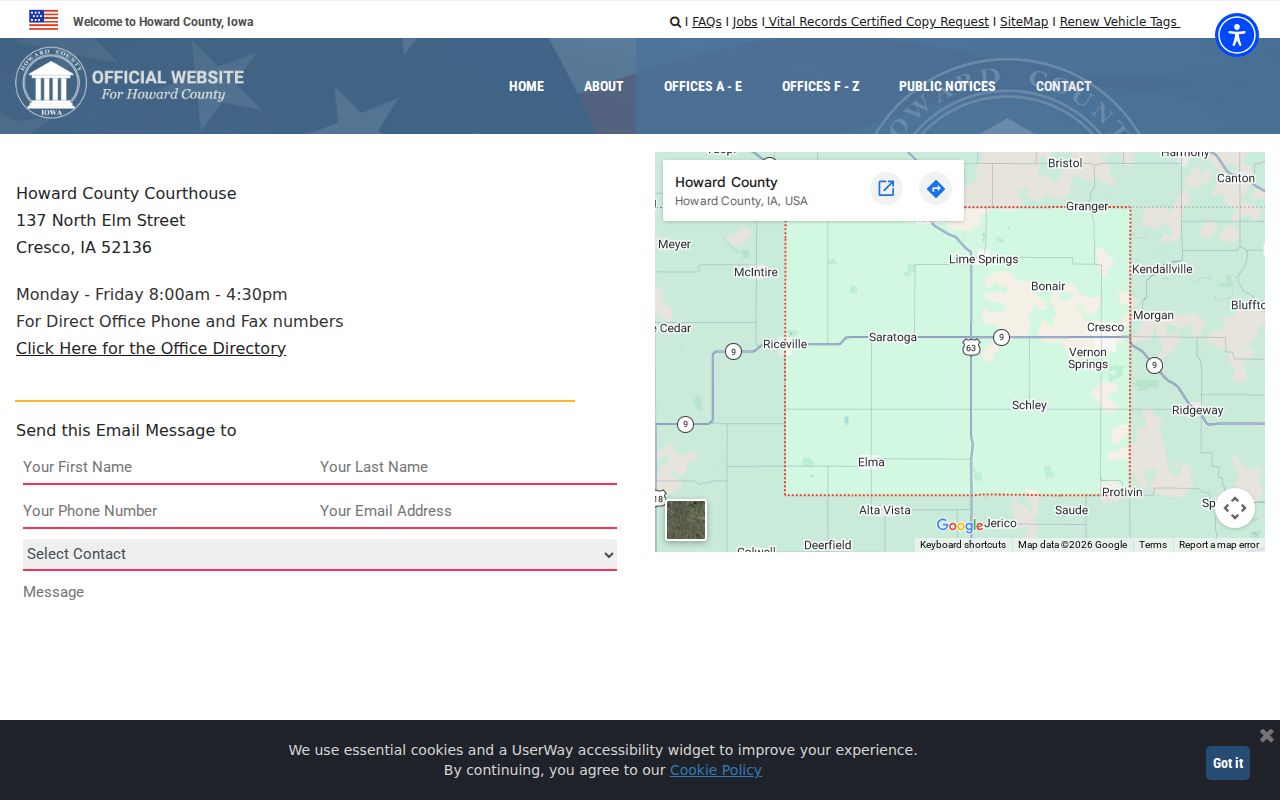
The courthouse listing directs the search from a booking allegation toward the filed case and final disposition.
Note: The Howard County jail phone is the live custody route because no official online county roster was found.
What a Howard County Criminal Record Shows
The Howard County fields depend on the source. A DCI record centers on identity and fingerprint-supported arrest cycles. A Howard County docket contains procedural events, filed charges, hearings, rulings, sentence entries, and financial obligations. Booking data is strongest on immediate custody facts. Read the source label before drawing a conclusion, and match more than a name when the portal permits it.
| Name & Identifiers | Names, aliases, birth information, party role, and agency or state identification numbers when public. |
|---|---|
| Arrest / Booking Data | Arrest date, agency, intake time, alleged charges, bond, release, and custody status. |
| Charges & Statutes | Charge number, description, Iowa Code citation, offense date, and level such as FE, AG, SR, or SM. |
| Disposition | Dismissal, acquittal, guilty plea or verdict, deferred judgment, and status for each charge. |
| Sentence | Custody, probation, fine, costs, restitution, and related court orders. |
| Custody / Supervision Status | Jail, prison, work release, probation, or parole information held by the proper agency. |
Record flow: Arresting agency › Howard County booking › County Attorney filing › Iowa District Court disposition › DCI update.
Why Howard County Arrests Go Missing
A local arrest does not always create a DCI criminal-history entry. DCI states that a fingerprintable arrest must be supported by prints submitted to the repository. If prints are not taken and sent, the event does not become part of that fingerprint-backed state history. A summons may also create a court case without a jail booking. At the other end, release without a filed charge can leave booking material but no District Court case.
Timing causes another Howard County gap. Courts report dispositions back to DCI, but a match can be delayed or fail when identifiers do not line up. A Howard County arrest may then remain listed without a final result. Compare the arrest record, the court case, and the DCI response. When a court outcome is absent, the certified Howard County disposition supplies the best correction proof.
The Iowa DOC Offender Search shows the separate corrections layer for prison and community supervision.
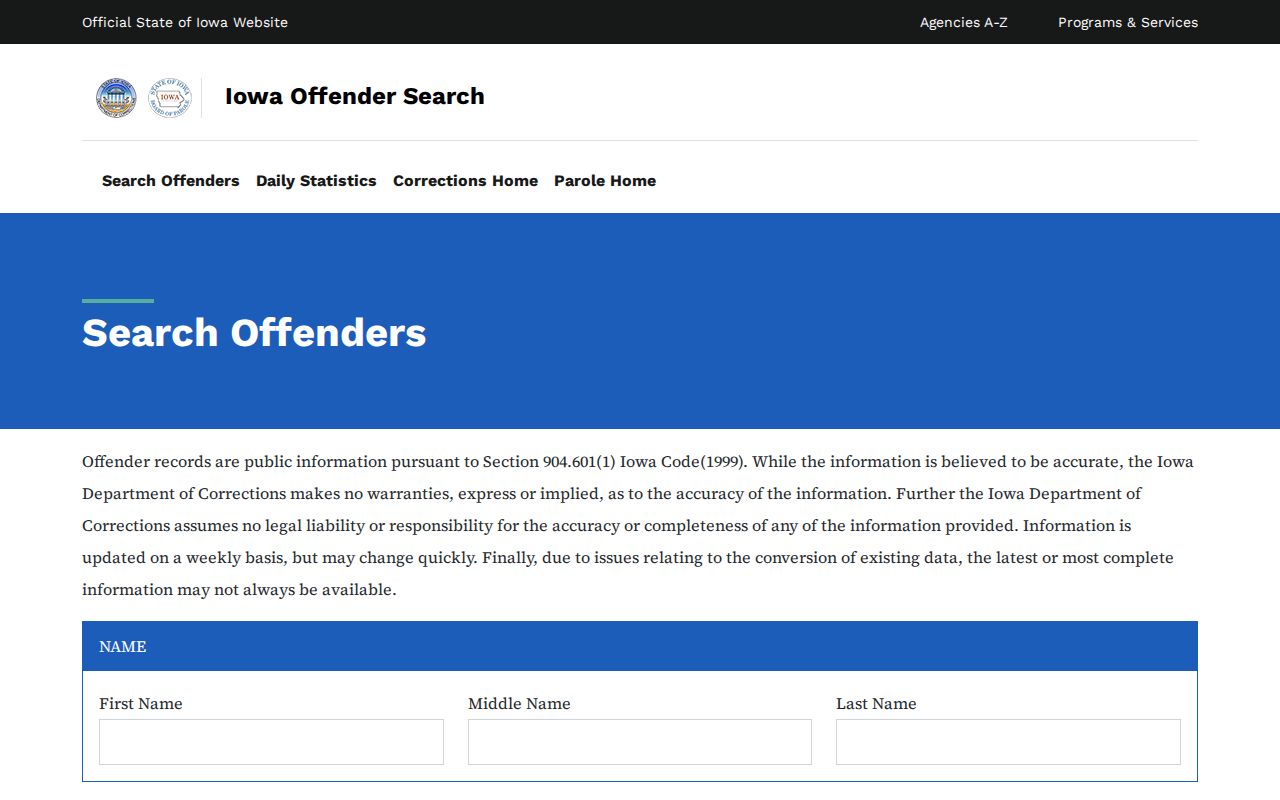
A DOC result answers a status question, not whether every local arrest or court event appears in the state history.
Note: A blank DCI result may reflect missing fingerprints, release limits, timing, or identity matching rather than proof that no event occurred.
Public Access Laws
The Iowa Open Records Law in chapter 22 supports inspection and copying of public records, but it does not turn every investigative detail into public information. Peace-officer investigative reports receive special protection under section 22.7(5). Certain immediate facts may remain available unless release would harm an investigation or pose a clear danger. Court records also follow Iowa Judicial Branch rules, while DCI dissemination follows chapter 692.
Key Iowa laws:
Iowa Code chapter 22 gives public-record access subject to exemptions and reasonable charges.
Iowa Code sections 692.2 through 692.4 govern the collection and release of criminal-history data.
Iowa Code section 232.147 keeps most juvenile court material confidential through a court-controlled process.
Iowa Code chapter 901C provides event-specific expungement routes for qualifying records.
Iowa Code chapter 692A governs sex-offender registration, public disclosure, and misuse.
Send the request to the office that made or keeps the record. If part is withheld, ask for the exact legal basis and for any reasonably separable public portion.
Howard County Warrants Without a List
Howard County publishes no verified active-warrant search or most-wanted list. Start with the Sheriff at 563-547-3535 for direct confirmation. Then review the Iowa Courts Online docket for warrant-related entries and call the Clerk at 563-547-9206. A bench warrant may arise from failure to appear or comply, while an arrest warrant follows a judicial probable-cause process. Search warrants can stay sealed while an investigation is active.
A person checking their own warrant status should ask the issuing court or counsel about appearance, bond, and surrender steps. Do not assume an old docket event means the warrant is still open, and never approach a person believed to be wanted. A chapter 22 request may help when a copy is needed, but public-record law does not override a sealed order or an active-investigation limit.
Note: No Howard County warrant amnesty program, special warrant line, or posted online bond instruction was found in the official research.
Sealed, Expunged, and Restricted Records
Iowa expungement is tied to a specific event and law. Chapter 901C covers qualifying acquittals, dismissals, and a limited set of misdemeanor convictions when its conditions are met. Deferred judgments follow sections 907.3 and 907.9. A successful discharge can remove the court record from ordinary public view, yet DCI says the completed deferred judgment stays in its file marked as discharged and may be released with signed authorization.
Begin a Howard County petition with the Clerk in the case court. Use the Iowa Judicial Branch forms directory and ask which form, filing treatment, proposed order, and certified-copy charge apply. After an order, check Iowa Courts Online, the Clerk file, and the DCI response separately. A court order does not automatically erase an agency narrative, a federal record, or every legally retained repository entry.
The official Iowa expungement chapter provides the controlling limits and conditions.
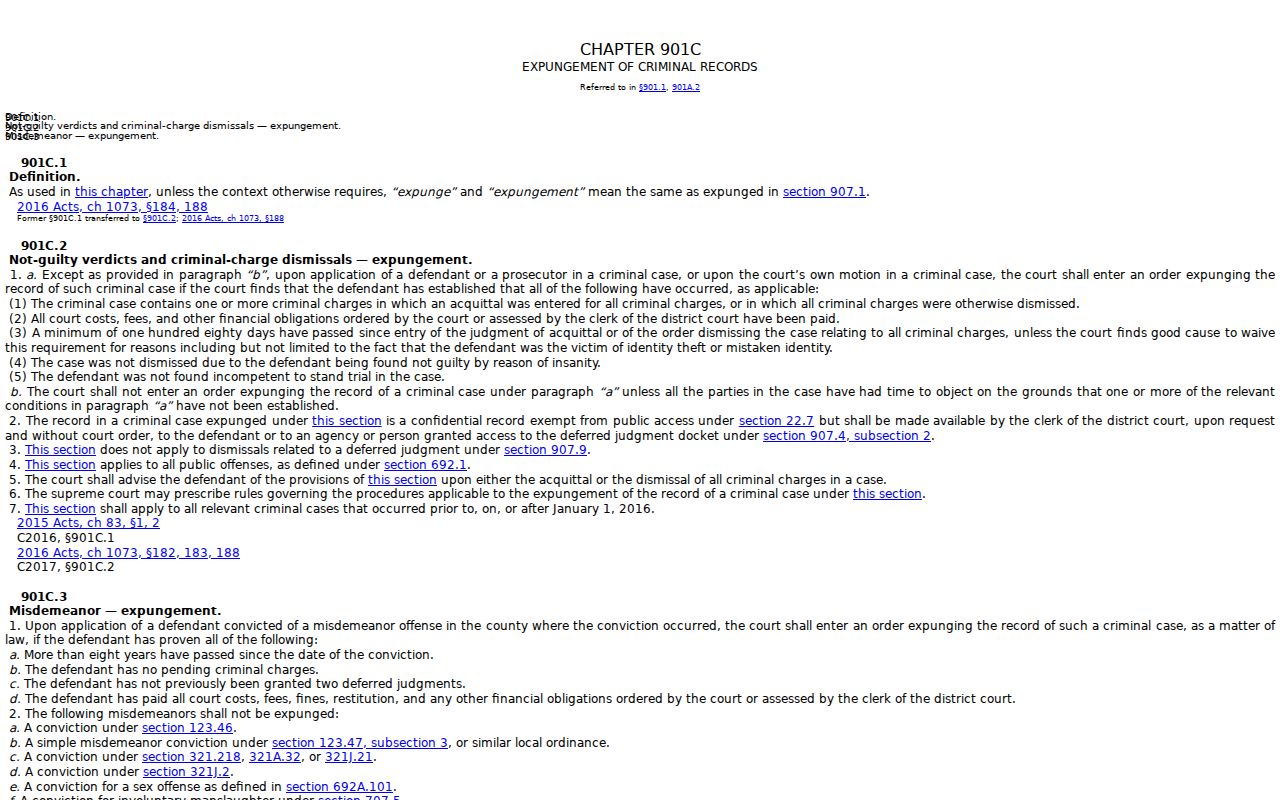
The statute should be matched to the exact disposition before any Howard County filing is prepared.
Note: Verify the court index and DCI response separately after relief because one order may affect each system in a different way.
Howard County Federal Record Layer
Federal cases from Howard County do not appear as Iowa District Court prosecutions. The county lies in the U.S. District Court for the Northern District of Iowa, and the official docket system is PACER. Federal custody belongs in the Bureau of Prisons locator. The FBI identity summary is a separate fingerprint-based subject-access record. These sources answer federal questions and should not be confused with the Howard County jail, Iowa DOC, or Iowa DCI name check.
The source of the Howard County charge is the quickest clue. A State of Iowa prosecution proceeds through the Howard County Clerk. A United States prosecution uses the federal district and PACER. If both layers matter, search them separately and compare exact identifiers rather than treating a blank state result as proof that no federal case exists.
The Northern District of Iowa website identifies the federal trial court serving Howard County.
The federal court page supplies official access and courthouse information outside the county record chain.
Criminal Records by City in Howard County
City location changes the first records contact. Cresco has its own police department, while the Howard County Sheriff is the main law-enforcement route for Elma and much of the rest of the county. Riceville crosses the Howard and Mitchell county line, so the exact street can change the responding agency, jail, prosecutor, and court. All three city paths ultimately use the proper Iowa District Court when a criminal charge is filed.
Cresco Criminal History
Population 3,888 in 2020 · City Police reports, Howard LEC booking, and county court files use separate counters.
Riceville Criminal History
About 806 residents in 2020 · Confirm whether the event was on the Howard or Mitchell side.
Elma Criminal History
Population 506 in 2020 · Howard Sheriff, the county jail, and the Clerk form the local record route.
Howard County Criminal Records Hub
Howard County was organized in 1851 and named for Tilghman Ashurst Howard. Early county-seat rivalry moved courts and records to Howard Center before Cresco became the lasting seat. That history helps explain the current compact records geography. The Courthouse holds the Clerk and County Attorney, while the nearby Law Enforcement Center houses the Sheriff and jail.
The Sheriff's stated patrol area covers about 480 square miles and includes law-enforcement responsibility for Lime Springs, Chester, Elma, Protivin, Riceville, and unincorporated land. Cresco Police remains a distinct custodian for city-generated reports. Small-agency data can shift sharply by year, and missing FBI Crime Data Explorer submissions should never be read as zero crime. Direct office confirmation carries more weight here than an unofficial list or an old search result.